This guide runs Wednesday to Saturday. It opens with the lesson that holds the whole week together: what gratitude is made of, measured in beans. Then we cook, we feast, we follow every bite through the body, and we carry the meal all the way through the weekend, until the last of it leaves the house as a gift.
Thanksgiving ends when the leftovers are gone, and the leftovers teach as much as the feast.
Use what you want from it.
The Shape of the Days
Day
What we learn
What we make
Wednesday morning
The Gratitude Lesson
The bean bowls and the equation of gratitude
Wednesday
Kitchen chemistry
The pies, the rolls, the butter, the cranberry sauce and the fudge
Thursday
Your body at the table: tryptophan, serotonin, melatonin and insulin
The Door Game, the Energy Map, and Thanksgiving led by the kids
Friday
The Leftovers Lab
Stock from the bones, the cold potato test, and the Leftover Remix Challenge
Saturday
Pass It On
Thank you cards, a plate for a neighbor, the freezer test and the closing circle
What to Gather
For Wednesday
A bag of dry beans and 3 bowls, plus tape and a marker for labels
One pint of heavy cream, two jars with tight lids, and a clean marble
3 packets of active dry yeast, sugar, 3 small clear bottles and 3 balloons
Two bags of fresh cranberries and one orange
Pie crusts, one can of pumpkin, evaporated milk, eggs and spices
Two cups of sugar, ⅔ cup of milk, two ounces of unsweetened chocolate, light corn syrup, butter and vanilla, for the fudge
A candy or instant read thermometer, a soft tape measure, and a kitchen scale in grams
A big bowl for the fridge, for every vegetable scrap of the week
For Thursday
A few real leaves from the yard as samples: maple, oak, birch, whatever falls near you
Paper in fall colors, scissors, pencils and markers
A loaf of sliced bread for the toast ladder
One black bean and 9 white beans, and a cup
For Friday
The turkey carcass and the scrap bowl, two bay leaves, peppercorns and a splash of vinegar
One carton of store-bought broth
Clear glasses and a spoon
For Saturday
Index cards or folded paper, two potatoes, a paring knife and paint
Shallow and deep containers with lids
A few frozen berries
Meet the artists
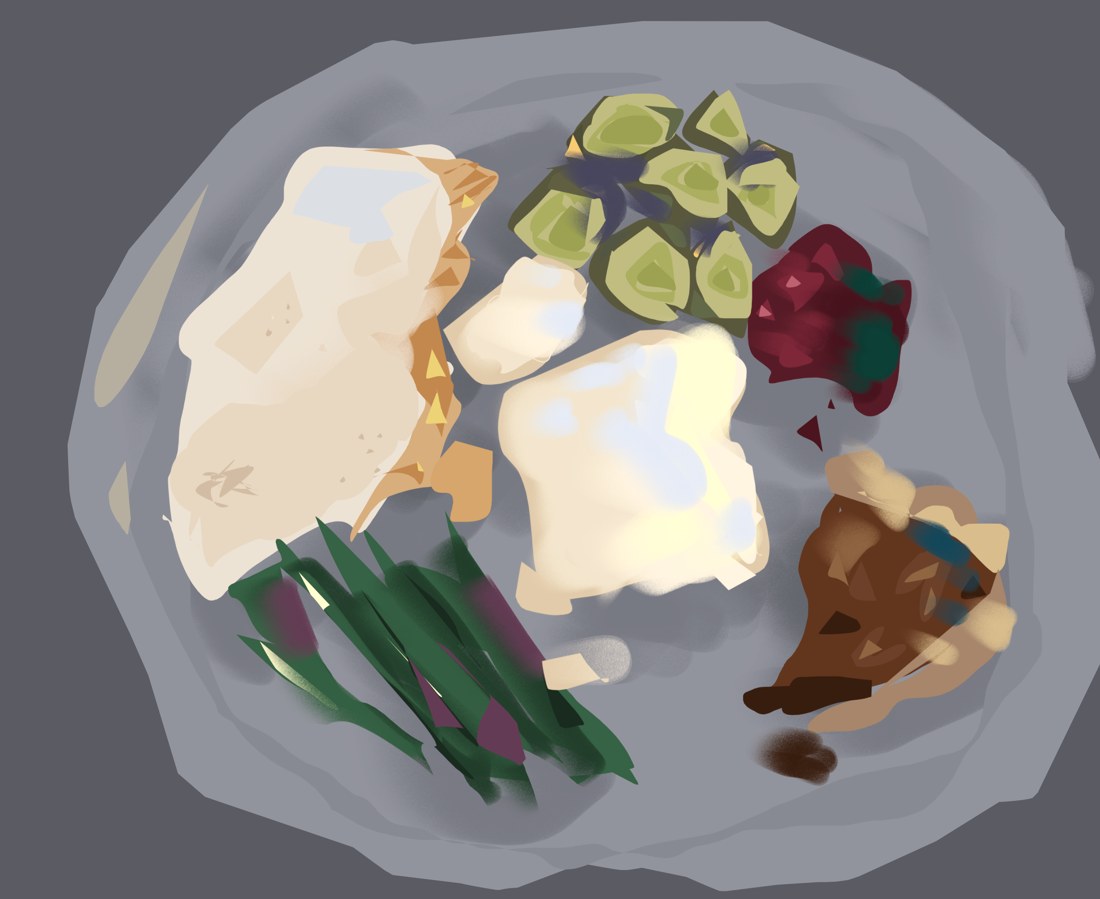
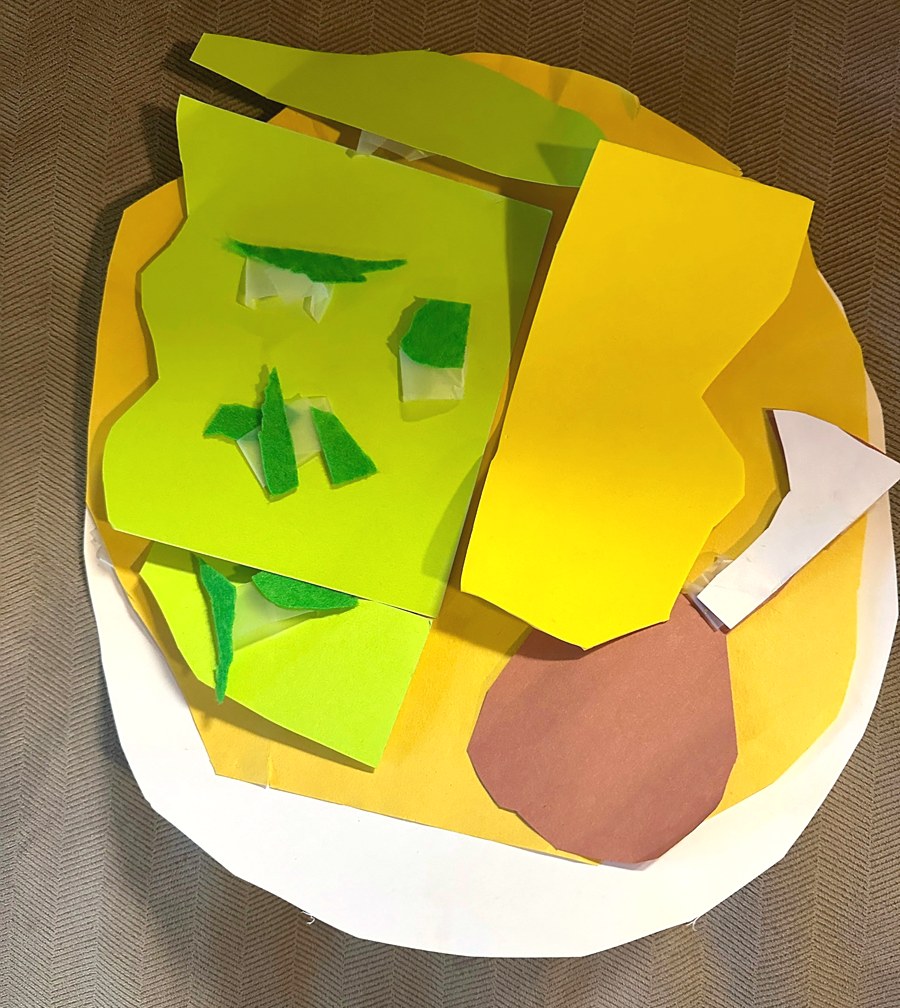
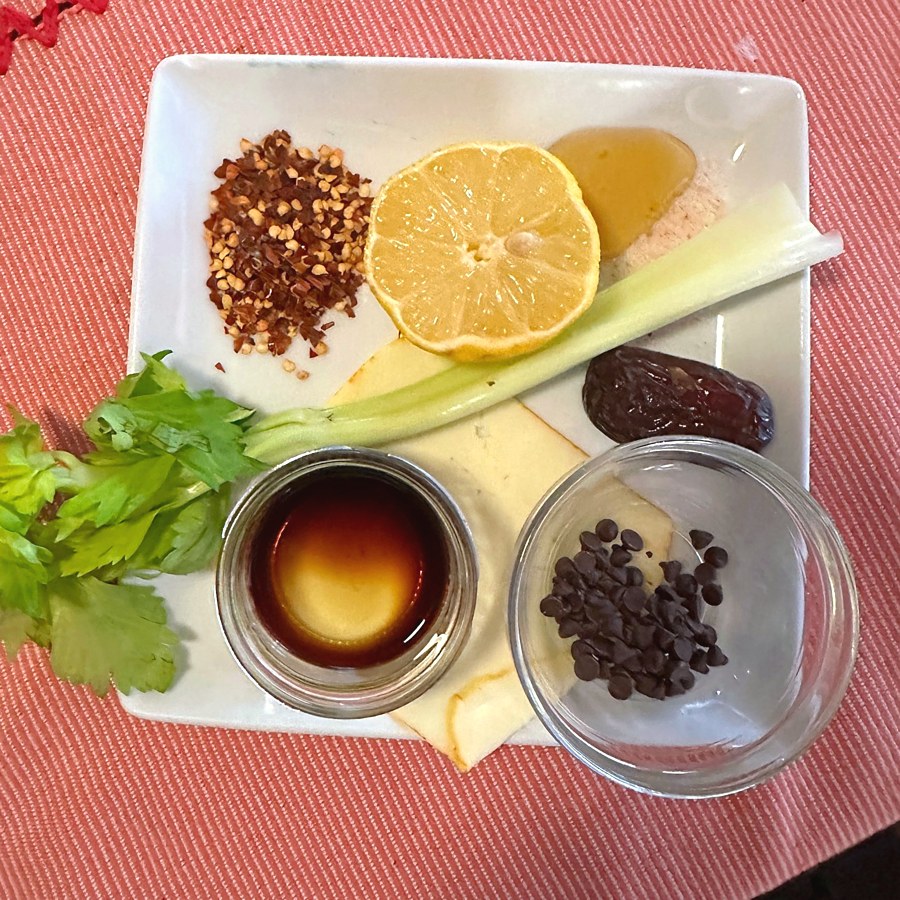
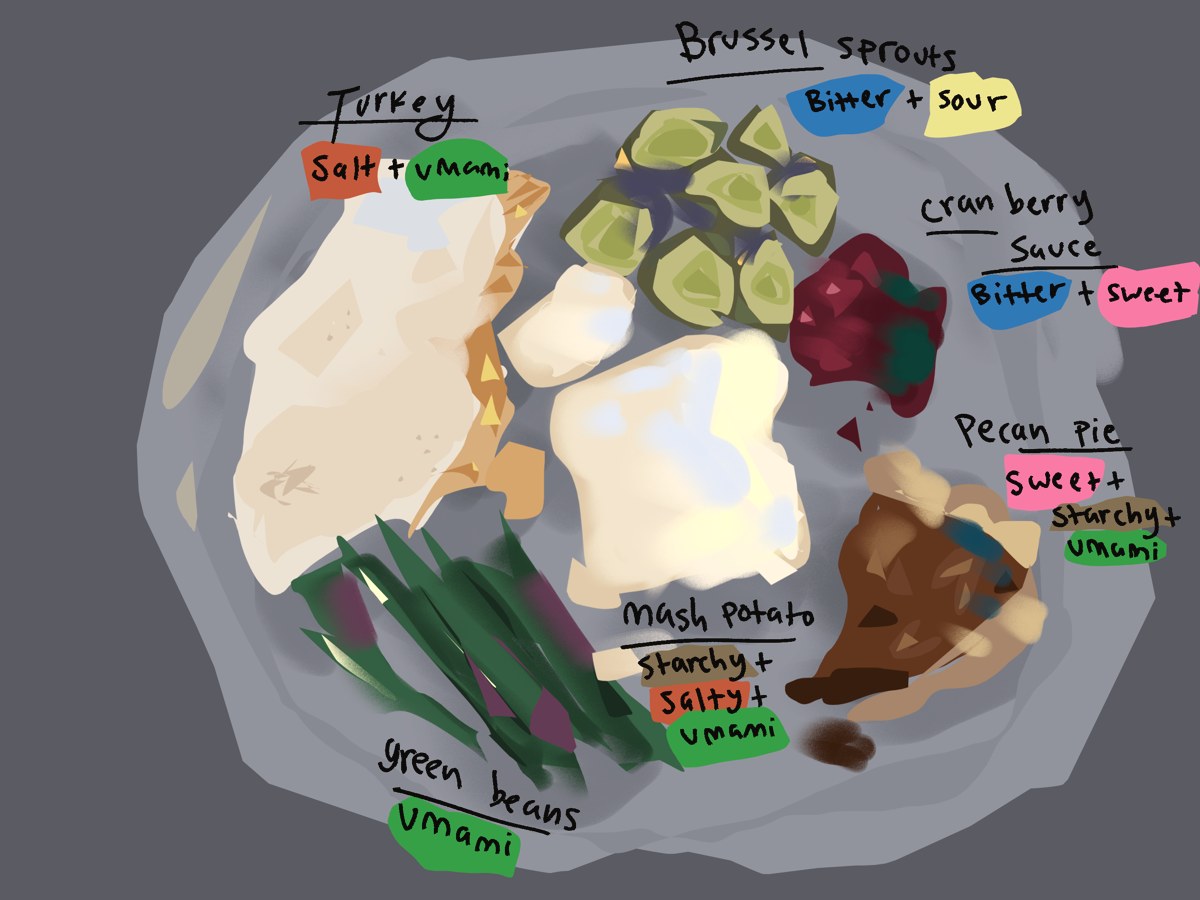
painted by Iza Ruby Brand, 13cut paper by Zai, 11our taste plate
Free for every family
Get The Table, free, and a new teaching every Monday
Leave your email and the downloads open right here: this week's guide to print, and the full Energy Guide from Energy Week, with every experiment, the Lab Notebook and the Answer Key. You also get The Roam's free plan every Monday on Substack.
You're in. Thank you.
The Energy Guide
Energy Week, all 5 days: stored energy, heat, light, electricity and the big drop, with the math and the Lab Notebook.
Run this lesson on Wednesday morning, before anyone touches a bowl of flour. It sets the tone for every day that follows.
Value and Cost
What it is
Gratitude is noticing what something gave you, and what it took to give it.
In nature
Every fall the maples drop their leaves, and the leaves break down into the soil that feeds the same maples in spring. The forest keeps a careful account of what it gives and what it gets back.
In you
Every moment of your day leaves you with something or takes something from you. Most days you add it up without noticing. A bowl of beans lets you see your own math.
Why it matters
A child who can see what they value can choose more of it. A parent who watches the beans move learns what their child loves, what they tolerate, and what wears them down.
Try it: Tonight at dinner, each person names the moment of their day that would earn the most beans.
Count what you value.
How It Started
This lesson started at our kitchen table with 3 bowls and a bag of dry beans. One bowl held the beans, and I labeled the other two Value and Cost. Then I told Iza a story about a trip to India, and every time something happened in the story, she moved beans. We went to an animal reserve. I made her go to a family dinner, and the family excused her early. She got to choose two Maine Coon kittens to bring home. We walked through the smells of the city and then the flower market.
She would pull two beans into Value and 10 into Cost, and I learned more about what she values in 20 minutes than in a month of asking. Her brother teasing her took out a whole handful. The smell of the cows in the street cost 20 beans. Watching her favorite show on a big screen beside a pool in a palace earned 20 back. Chores, even at the palace, cost 5.
Then we wrote the equation of gratitude together, and it set the tone for the whole week.
The Bean Bowls
Fill one bowl with about 100 dry beans. Label two empty bowls Value and Cost.
Tell your child a long, winding story of an adventure with them in it. Mix the wonderful with the annoying: a long car ride, a surprise, a sibling, a bad smell, a treat, a chore.
After each moment, your child moves beans: into Value for what the moment gave them, and into Cost for what it took. They choose how many.
Ask about intentions as you go. When the family excused you early, were they trying to help you? Does that change the beans?
Ask how they felt in their body. Were you tired? Hungry? A hungry child moves more beans to Cost, and so does a hungry parent.
At the end, count both bowls and write the totals in the Lab Notebook. Keep the numbers. You run the bowls again on Saturday.
Look together at the 3 biggest moves in each bowl. What do they tell you?
A story to start with. Fill in the blanks together, and move beans after every line.
You wake up in __ (a city far away). The first thing you smell is __. Your __ (family member) wants to go see __, and you would rather __. On the way, it starts to __. Then a stranger hands you __. You walk into a market full of __, and you buy __ for __ (a person you love). That night you have to __ (a chore), and someone __ (does something kind). Before you sleep, you look out the window and see __.
For little ones: Use 20 beans and 5 moments, and let them drop the beans in with a loud clink.
For older kids: Let them tell the story to you while you move the beans. Then compare what each of you valued.
The Equation of Gratitude
In 1968, the psychologists Abraham Tesser, Robert Gatewood and Michael Driver tested what makes people feel grateful. They found 3 things that raised it: how valuable the gift was to the person receiving it, how much it cost the giver, and whether the giver meant it for the receiver's good.
G = V × C × I
G is gratitude. V is the value to you, C is the cost to the giver, and I is intention, how much the giver meant it for your good. Score each from 1 to 10.
In the bean bowls, Cost meant what a moment took from you. In the equation, cost is what the gift took from the person who gave it. A scarf knitted over 3 weeks carries more than one bought in 3 minutes.
Why multiply? If the intention is 0, if someone gave you a gift only to look good, the whole thing falls to 0. Adding would hide that, and multiplying shows it.
Worked example
A scarf your grandmother knitted: V = 7, C = 9, I = 10.
G = 7 × 9 × 10 = 630
A gift card from someone checking a box: V = 7, C = 2, I = 2.
G = 7 × 2 × 2 = 28
The value to you is the same, and the gratitude is 22 times bigger.
Worked example, from the bowls
100 beans to start. 41 went to Value and 37 went to Cost.
Left in the first bowl: 100 − 41 − 37 = 22
Value minus Cost: 41 − 37 = 4, so the story came out a little ahead.
Value as a share of all the beans moved: 41 ÷ 78 × 100 = 53%
Push on it
Add N for noticing. You can only feel grateful for what you noticed. Does N belong in front: G = N × V × C × I?
A gift you expected feels smaller than a surprise. Would you divide by expectation?
The sun gives every calorie on the Thanksgiving table. It pays no cost and has no intention, so the equation says 0, and we feel enormous gratitude anyway. Maybe there are two kinds of gratitude: one between people, and one toward life itself.
Design your own test. Pick one variable: value, cost, intention, noticing or surprise. Write 4 short scenes where only that variable changes, like a card bought at a store and a card made by hand over two hours. Everyone rates each scene from 1 to 10. Average the ratings and draw a bar graph. Did the variable move the number?
Try these
V = 5, C = 5, I = 5. What is G?
A gift has V = 10 and C = 10, and I = 0. What is G?
If you double one variable and keep the others the same, what happens to G?
The same gift is noticed at N = two by one person and N = 8 by another. How many times more grateful is the second person?
You started with 100 beans. 28 went to Value and 45 went to Cost. How many stayed in the first bowl, and what share of the beans moved went to Value?
What Gratitude Does
In 2003, the psychologists Robert Emmons and Michael McCullough asked people to write down 5 things they were grateful for, once a week, for 10 weeks. Compared with people who wrote about hassles or ordinary events, the gratitude group felt better about their lives as a whole and more hopeful about the week ahead.
You can feel it in your body. Sit still for one minute and count your pulse for 15 seconds, then multiply by 4. Now breathe in for 4 counts and out for 6, and name what you are grateful for in your head. Count again. A long exhale slows the heart through the vagus nerve and tells the body it is safe to rest and digest, which is where Thursday's chemistry begins.
WednesdayKitchen Chemistry
Butter, yeast, cranberries, custard and fudge
Kitchen Chemistry
Iza labeled every food by taste
What it is
Cooking is chemistry you can eat. Heat, salt, acid, air and time rearrange molecules into new ones, and every change in the pot has a reason.
In nature
A cranberry floats because it carries 4 pockets of air inside. A maple leaf turns orange in October because its green chlorophyll breaks down and the orange carotenoids underneath show through. The kitchen follows the same rules as the bog and the forest.
In you
Your stomach is a kitchen too. It works with acid like the cranberry, with enzymes like the yeast, and with warmth like the oven, all at 98.6ºF.
Why it matters
A child who leads a kitchen for a day learns planning, math and leadership in one afternoon, and gets to feed the people they love.
Try it: Before anyone turns on a burner, each cook says out loud what they are about to change. "Heat is going to set this egg." A prediction said out loud is a scientist's promise.
Every change in the pot has a reason.
The Kitchen Ritual
Opening the kitchen
Hair back, apron on, and wash your hands for 20 seconds. Soap has one end that grabs water and one end that grabs fat, so it lifts the grease off your skin.
The head cook lights a small candle on the windowsill. It stays lit while the kitchen is open.
The head cook thanks one ingredient from the ground up: the soil, the rain, the plant or animal, the people who grew it and carried it here, and the sun.
Every helper asks the head cook, "What do you need from me?"
Closing the kitchen
Peels and ends go into the scrap bowl in the fridge. They become Friday's stock.
Counters wiped, dishes away, floor swept.
The head cook writes one line about what changed in the pot and one line of thanks.
Blow out the candle.
The Stations
Butter by hand. Cream is tiny drops of fat floating in water, each drop wrapped in a thin skin. Pour one cup of cream and a clean marble into a jar and pass it around the table. Whoever holds the jar names someone they are grateful for and shakes for one minute. First comes whipped cream, then the marble goes quiet, then the skins break and the fat clumps into butter. One cup of cream, about 240 g, makes about 106 g of butter. Save the buttermilk for the rolls.
Living bread. Fill 3 bottles with one cup of water: ice cold, warm at 105 to 110ºF, and hot at 140ºF. Add one packet of yeast and one tablespoon of sugar to each, and stretch a balloon over each top. Measure each balloon around every 10 minutes for 40 minutes. Yeast is alive. In the 1850s, Louis Pasteur showed that it is what makes dough rise. It works fastest in the warm bottle and dies in the hot bottle. Mix the roll dough beside it, and let it rise overnight in the fridge.
The floating bog. Drop 10 cranberries into a bowl of water and push them under. Cut one open and count the air chambers. Then make the sauce: 12 oz of cranberries, ¾ cup of sugar, ½ cup of water and ½ cup of orange juice. Simmer and listen for the pops as the air inside each berry heats and bursts the skin. Pectin from the berries sets the sauce as it cools.
The egg sets. Egg proteins start as tight balls. Heat unwinds them, and they link together and turn the liquid filling into custard. Pumpkin pie sets between 175 and 185ºF. Pull it at 175ºF, when the middle still jiggles a little, because the heat keeps cooking it after it leaves the oven.
Beat It Together: Fudge
Fudge is sugar coming together in a crowd, and it turns out creamy only when everyone beats at the right moment.
The science. The syrup boils until enough water leaves that it is about 85% sugar, at 234 to 240ºF. Then it cools untouched to 110ºF, holding far more sugar than it can keep. When everyone beats it, billions of tiny seed crystals form at the same moment, the sugar spreads across all of them, and every crystal stays too small for your tongue to feel. Beat it while it is still hot, and fewer crystals form, each crystal grows large, and the fudge turns grainy.
Butter an 8 inch square pan.
Stir two cups (400 g) of sugar, ⅔ cup of milk, two ounces of chopped unsweetened chocolate and two tablespoons of corn syrup in a heavy pot over medium heat until the sugar dissolves.
Clip on the thermometer and stop stirring. A grown up boils it to 234ºF.
Take it off the heat, set two tablespoons of butter on top, and leave it alone until it cools to 110ºF, about 45 minutes.
Before it cools, spoon two tablespoons of the hot syrup into a cup and beat it right away. This is your too soon sample.
At 110ºF, add one teaspoon of vanilla and pass the pot and the spoon around the circle. Whoever is beating names one thing they are grateful for this week and beats until their arm gives out.
When the gloss turns matte and the spoon holds its shape, spread it in the pan right away.
Taste the too soon sample against the real fudge.
The fudge usually turns matte in the hands of whoever happens to be holding it, and that person gets the first piece.
For little ones: Shake the butter jar, drop the cranberries in water, and watch the fudge turn from shiny to matte.
For older kids: Run the oven schedule. One oven and 3 pies means planning backward from dinner, and the head pastry chef owns the clock.
The Math of Prep Day
Worked example
400 g of sugar fills 400 ÷ 1.59 = 252 cubic centimeters. A fudge crystal is about 0.001 cm across, so it fills 0.000000001 cubic centimeters.
252 ÷ 0.000000001 = about 252 billion crystals in one pan.
Try these
How much butter will two cups (480 g) of heavy cream make? Cream is 36% fat, and butter is 81% fat.
A cranberry sauce feeds 8. Scale ¾ cup of sugar to feed 12.
The pie bakes at 350ºF. What is that in ºC?
Unexpected Learning
Did you know? It takes about 21 pounds of milk to make one pound of butter.
Did you know? About 95% of Massachusetts cranberries are harvested by flooding the bogs, so the berries float up in a red sea.
ThursdayThe Table
Your body at the table, and the feast
The Table
What it is
Thanksgiving is the ritual your family designed on Monday night, lived on purpose, and led by the kids.
In nature
Geese fly south in a V and take turns at the front. The lead goose breaks the wind for the rest, then drops back, and another takes its place, so the whole flock goes farther together.
In you
Today you get to feel what you planned. Every dish carries a person and a choice.
Why it matters
Children who lead a holiday learn they can shape the days that shape them. They grow up knowing a tradition is something they get to carry and to write.
Try it: Before you eat, name one dish and the person who made it.
Now we are together.
The Science of Browning
In 1912, the French chemist Louis-Camille Maillard heated sugars with amino acids and watched them turn brown. The Maillard reaction gives roast turkey, toast and bread crust their color and flavor. It speeds up above about 285ºF and makes hundreds of new flavor molecules. Sugar on its own browns at about 320ºF, which is caramelization.
Water boils at 212ºF, and a wet surface stays near that temperature until it dries. That is why cooks pat the turkey dry, and why the golden skin arrives at the end.
The toast ladder. Toast 5 slices of the same bread for 1, 2, 3, 4 and 5 minutes. Line them up from palest to darkest, smell them, taste them, and vote. This takes 10 minutes while the turkey roasts.
Your Body at the Table
our taste plate, 6 tastes on one plate
Thanksgiving is the biggest chemistry experiment of the year, and it runs inside every person at the table. Follow one bite of turkey and one bite of potato all the way through, and you meet 4 molecules: tryptophan, serotonin, melatonin and insulin.
Before the first bite. Digestion starts with the smell of the kitchen. Your brain reads the smell and sends a message down the vagus nerve, the long nerve from your brain to your belly, and your mouth makes saliva and your stomach makes acid before you eat anything. When the table stops and gives thanks, breathing slows, the heart settles, and the whole body shifts into rest and digest. The pause is the first step of the meal.
Tryptophan, the raw material. Turkey is protein, and protein is built from 20 kinds of amino acids linked in long chains. Tryptophan is one of them, and your body cannot make it, so every bit of it comes from food: turkey, chicken, eggs, milk, cheese, oats and pumpkin seeds. Turkey carries about the same amount as chicken. Tryptophan is also the rarest amino acid in most proteins, and that becomes important at the door to the brain.
Serotonin, the steady messenger. Your body turns tryptophan into serotonin in two chemical steps. In the brain, serotonin helps you feel calm and steady. In the gut, it squeezes food along through your intestines. More than 90% of the serotonin in your body is made in your gut, by special cells in its lining called enterochromaffin cells. In 2015, Elaine Hsiao and her team at Caltech found that gut bacteria help those cells do it: in mice raised with no gut bacteria, the cells made about 60% less serotonin. Fiber from the vegetables feeds those bacteria. Gut serotonin stays in the body, and the brain makes its own supply from the tryptophan that reaches it.
Melatonin, the night signal. When it gets dark, the pineal gland, a small gland deep in the brain about the size of a grain of rice, turns serotonin into melatonin. Melatonin tells every cell in your body that night has come. Bright light slows it down, and darkness lets it rise.
The door to the brain. Your brain is protected by a tight wall of cells called the blood brain barrier. Tryptophan gets through by a special door, and it shares that door with 5 other amino acids from the same meal: leucine, isoleucine, valine, phenylalanine and tyrosine. They all crowd the door at once. Tryptophan is the rarest of them, so after a meal of only protein, it waits at the back of the line.
Insulin, the broom. Then the potatoes, stuffing, rolls and pie arrive. Starch breaks down into glucose, a sugar, and as glucose rises in the blood, the pancreas releases insulin. Insulin tells your muscles to pull glucose out of the blood, and the muscles pull in the competing amino acids too. Tryptophan stays behind, because most of it is holding on to a protein in the blood called albumin. With the crowd swept away, more tryptophan reaches the door. In 1971, John Fernstrom and Richard Wurtman at MIT showed this in rats: a meal of carbohydrates raised tryptophan and serotonin in their brains. In people, the effect after a mixed meal is smaller, and scientists still study how much it changes mood.
The turkey nap, explained. The sleepy feeling after the feast is the whole plate working together. A very big meal sends blood toward your gut, your body settles into rest and digest, the starches open the door for tryptophan, and by evening the dark turns serotonin into melatonin. Turkey gets the credit, and the plate shares it.
The Door Game
A model makes the invisible visible. Beans stand in for amino acids, and a cup stands in for the door.
Put one black bean and 9 white beans in a cup. The black bean is tryptophan. The white beans are the amino acids it competes with.
Close your eyes and draw one bean. Write down its color, put it back, and shake the cup.
Draw 20 times, and count how often tryptophan came through the door.
Now insulin arrives. Take 4 white beans out of the cup and set them aside. They went to the muscles.
Draw 20 more times, and count again.
Compare the two counts in the Lab Notebook.
For little ones: Play it standing up. Everyone lines up at a doorway, one person is tryptophan, and a grown up with a broom sweeps 4 people off to the couch, the muscles. Who gets through the door now?
For older kids: Work out the chance of drawing tryptophan before and after the broom, and predict your counts before you draw.
Plan the Meal with Your Chemistry
Zai's plate: half green, a quarter turkey, a quarter starch
Knowing how it works lets you plan with it. Before Thursday, sit down together and design the day around what your bodies do.
Start with the pause. Your Words Before All Else open the head phase, so everyone sits down ready to receive the food.
Choose the order. Researchers at Weill Cornell in 2015 served 11 adults with type two diabetes the same meal twice. When they ate the protein and vegetables 15 minutes before the bread, their blood sugar and insulin rose less after the meal. A 2019 study of people with prediabetes found the peaks were more than 40% lower when the carbohydrates came last. Try a version at your table: the greens and green beans first, then turkey, then the potatoes, stuffing and rolls.
Keep protein and starch together. The starch brings insulin, and the turkey brings tryptophan. They work as a team.
Wait 20 minutes before seconds. The full signal takes about that long to reach your brain. Fill the time with the stories behind each dish.
Walk within 30 minutes. Your muscles pull sugar out of the blood with every step.
Dim the lights after sunset. The sun sets around 4:25pm in Connecticut this week. Candles and low lamps let melatonin rise on time, and everyone sleeps well after the big day.
The Energy Map
Turn Thursday into data.
On Wednesday night, each person draws a prediction: a line showing how their energy will rise and fall from 10am to 8pm.
On Thursday, every hour on the hour, each person rates their energy from 1 to 10 and writes it in the Lab Notebook.
Mark the meal, the walk and the sunset on the same timeline.
On Friday, graph the real numbers beside the prediction.
Talk it through: When did your energy dip? What brought it back? What would you plan differently next year?
For older kids: At Friday's leftover lunch, try the order experiment on yourself. One person eats the starch first and another eats the vegetables and turkey first. Each rates their energy and fullness at 30, 60 and 90 minutes, and you compare.
The Math of the Body
Chance = favorable beans ÷ total beans
Worked example
Before the broom: one tryptophan bean ÷ 10 beans = 1/10, or 10%
After the broom: one tryptophan bean ÷ 6 beans = 1/6, or about 17%
In 20 draws, you would expect about two tryptophan beans before the broom and about 3 after.
Try these
If insulin sweeps away 6 white beans, what is the chance of drawing tryptophan?
Your pulse was 88 beats per minute after dinner and 72 after the walk. What is the percent change?
The full signal takes 20 minutes. If dinner starts at 4:15pm, when is the earliest time for pie?
Ideas for Your Day
A morning walk in pajamas. Coats over the top. Listen to the woods on a holiday morning.
Gratitude leaves. On the morning walk, each person picks a few real leaves as samples. Back home, look closely at each leaf: the shape of the edge, how the veins branch from the middle, where the stem joins. Trace or draw them onto colored paper, cut them out, and write one thing you are grateful for on every paper leaf. The paper leaves cover the table for the meal. Keep them all.
Your own Words Before All Else. The Haudenosaunee open every important gathering with the Thanksgiving Address, giving thanks in order from the earth to the sky. Before you eat, each person thanks one part of the world in that order: the earth, the water, the plants, the animals, the sun, the moon and the stars. After each thanks, the table answers with a line your family writes together.
One dish, one story. Each person tells the story behind one dish, and each kid shares the food they researched on Tuesday.
The walk after. 15 minutes together before you close the kitchen. In 2022, researchers at the University of Limerick reviewed 7 studies and found that even 2 to 5 minutes of light walking after a meal lowered the rise in blood sugar.
A performance. A song, a poem or a piece of music from a kid, after dinner.
Before Bed: Pack the Leftovers
Leftovers go into the fridge within two hours of the meal, divided into shallow containers so they cool fast. They can go in warm. Label each container with the date. The turkey carcass goes into a bag in the fridge for tomorrow's stock.
FridayThe Leftovers Lab
Stock, cold potatoes and the remix
The Leftovers Lab
What it is
Leftovers are the second meal. Every scrap still holds energy, flavor and nutrition, and turning them into something new is a skill as old as cooking.
In nature
On the forest floor, nothing goes to waste. Fungi and bacteria break down fallen leaves and logs, and the nutrients return to the soil to feed the same trees in spring.
In you
Using what you already have is a kind of gratitude. It says the food, the work and the people behind it mattered enough to finish.
Why it matters
In the United States, an estimated 30 to 40% of the food supply goes uneaten, according to the USDA. A family that knows how to remix leftovers saves money, saves the resources that grew the food, and gets 3 more good meals out of one feast.
Try it: Open the fridge together and count the containers. Each person claims one to remix today.
The second meal counts too.
The Science of Leftovers
Why the fridge works. Bacteria multiply fastest between 40 and 140ºF, a range food safety experts call the danger zone. A fridge at 40ºF or colder slows them down without stopping them, which is why the USDA says cooked leftovers keep for 3 to 4 days. Leftovers packed on Thursday night are good through Monday.
Why cold potatoes go firm. Starch is made of long chains of sugar. Cooking loosens the chains and soaks them with water, which makes mashed potatoes soft. As they cool, the chains line back up into tight rows, and the potatoes firm up. Scientists call this retrogradation. Some of that lined up starch becomes resistant starch, which passes through to your large intestine and feeds your gut microbes. Reheating loosens the rows again.
Why stock turns to jelly. Bones and joints are full of collagen, a protein built from 3 strands twisted like rope. Collagen is the most common protein in your body, about a third of all of it. When bones simmer for hours, the heat unwinds the rope into single strands called gelatin. When the stock cools, the strands tangle into a net that holds the water still, and the stock sets like jelly.
The Jelly Test
Put the turkey carcass and the whole scrap bowl into your biggest pot. Add two bay leaves, a few peppercorns and one tablespoon of vinegar.
Cover everything with cold water, and measure how much water you add.
Bring it to a bare simmer and keep it there for 4 to 6 hours. Skim the foam now and then.
A grown up strains it. Measure how much stock you have.
Pour one cup of your stock and one cup of store-bought broth into two glasses, and chill them overnight.
Saturday morning, tip each glass sideways. Record which glass wobbles and which glass pours.
The Cold Potato Test
Spoon cold mashed potatoes from the fridge into a cup, and stand a spoon straight up in the middle. Count how many seconds it stays up.
Warm the same potatoes until they steam, and try the spoon again.
Record both times. The cold starch holds the spoon longer because its chains are lined up tight.
The Leftover Remix Challenge
Each kid picks 3 leftovers.
Using Tuesday's Taste Map, they find the slice their dish is missing. Rich leftovers usually need sour, spicy or something fresh.
Each kid invents one new dish and gives it a name. Ideas to start: stuffing pressed into a waffle iron, mashed potato pancakes, turkey and cranberry quesadillas, or a slice of pie blended with milk.
The family tastes each dish and scores it from 1 to 10.
Average the scores and record them in the Lab Notebook.
For little ones: Let them build a leftover plate in 5 colors and name it.
For older kids: Write the winning remix as a recipe card, in grams and ºC, so it can come back next year.
Today's Ritual: The Second Thanks
At lunch, each person names the dish they would make again, and thanks the person who made it.
The Math of Leftovers
Worked example
If a family throws away 30% of a 12 pound turkey:
12 × 0.30 = 3.6 pounds of turkey in the trash
Worked example
The NRDC estimates that about 204 million pounds of turkey are thrown away over Thanksgiving week.
204,000,000 ÷ 12 = 17 million turkeys of 12 pounds each
Try these
Leftovers packed on Thursday, November 26 keep for 4 days. What is the last day to eat them?
You started the stock with 4 liters of water and ended with 2.5 liters. What percent left as steam?
Remix scores of 9, 6, 8 and 5. What is the average?
The danger zone runs from 40 to 140ºF. What is that in ºC?
Unexpected Learning
Did you know? Gummy bears and marshmallows set because of gelatin, the same protein that turns your stock into jelly.
Did you know? Cranberry sauce keeps longer than the rest of the leftovers, about 10 to 14 days, because its acid and sugar slow bacteria down.
SaturdayPass It On
Thank you cards, the freezer and the closing circle
Pass It On
What it is
Gratitude grows when it leaves the house. Sharing food is one of the oldest ways people say thank you, in every culture on earth.
In nature
Trees share too. In 1997, the forest ecologist Suzanne Simard and her team in British Columbia showed that birch and Douglas fir trees pass carbon to each other through the fungal networks that connect their roots. A tree in the sun can feed a tree in the shade.
In you
Giving feels good in your body. In 2008, the psychologists Elizabeth Dunn, Lara Aknin and Michael Norton gave people money and asked some to spend it on themselves and some to spend it on others. The people who spent it on others were happier at the end of the day.
Why it matters
A child who sees thanks travel out of the house learns that gratitude is something you do as well as something you feel.
Try it: Name one person outside the family who made this week possible, and decide together how to thank them.
Gratitude grows when you give it away.
The Science of Freezing
Freezing turns the water in food into ice. At 0ºF, bacteria stop multiplying, so frozen food stays safe for months, and the USDA says frozen leftovers keep their best quality for about 2 to 6 months.
How fast food freezes changes how it tastes. This is Wednesday's fudge again. Fast freezing makes many tiny ice crystals, and slow freezing makes fewer, bigger ones. Big crystals poke holes in the walls of the food's cells, so when it thaws, the water leaks out and the food goes soft and mushy.
The Freezer Test
Spoon the same leftover, like stock or cranberry sauce, into a shallow container and a deep container.
Put both in the freezer and check every 30 minutes. Record when each container is frozen solid.
Thaw a few frozen berries on a plate and watch the juice run. That is the ice crystals at work.
Label everything you freeze with the date, so the leftovers become a gift to yourself in January.
Thank You Cards
Cut two potatoes in half and carve a heart, a leaf or one big letter into each cut face. Letters carve backward.
Paint the stamp and press it onto index cards in bright, overlapping layers.
Each person writes one card to someone outside the family: a teacher, a neighbor, the person who delivers your mail, or a grandparent.
Say what they did and why it mattered.
A Plate for a Neighbor
Choose one neighbor or friend together.
Pack a plate of leftovers that are still within their 4 days, or a few squares of Wednesday's fudge and a slice of pie.
Deliver it the same day, with a thank you card on top.
The Closing Circle
Set out the 3 bean bowls from Monday: Beans, Value and Cost.
Tell the story of the whole week together, Monday to Saturday, moment by moment.
Each person moves beans for each moment.
Count the bowls and compare them with Monday's totals.
Each person answers: What worked for me this week? What did I make that I am proud of? What am I grateful for? What do I want more of?
Read the paper leaves from Thursday out loud, one by 1, and count them. Put them in a jar. In spring, they go into the garden soil, so the thanks feeds what grows next.
For little ones: Skip the counting, and let them drop beans with a loud clink for every moment they loved.
For older kids: Compare the bowls with Monday's, and work out the percent change in Value.
The Math of Pass It On
Percent change = (new − old) ÷ old × 100
Worked example
On Monday, the Value bowl held 34 beans. On Saturday it held 51.
(51 − 34) ÷ 34 × 100 = 50% more
Try these
Monday's Value bowl held 40 beans, and Saturday's held 52. What is the percent change?
Your shallow container froze in 90 minutes and the deep container in 4 hours. How many times longer did the deep container take?
Frozen leftovers keep their best quality for about 2 to 6 months. If you freeze stock on November 28, what is the latest month to use it?
Unexpected Learning
Did you know? Japan gives thanks on November 23 every year, Labor Thanksgiving Day, and kids make thank you cards for the people who work.
Did you know? Snowflakes are ice crystals that grew slowly in still air, which is why they are big enough to see. Ice cream stays smooth because it is churned while it freezes, the same way you beat the fudge.
Lab Notebook
The Gratitude Lesson
Person
Value
Cost
Left in the bowl
Value − Cost
Gift or moment
V
C
I
G = V × C × I
Wednesday
Butter
Minutes
Whipped cream
Marble goes quiet
Butter
Yeast balloon, cm around
10 min
20 min
30 min
40 min
Cold
Warm
Hot
Fudge
Temperature
Minutes
Soft ball reached
Cooled to 110ºF
Gloss goes matte
Thursday
Toast
Minutes
Color
Votes
1
1
2
2
3
3
4
4
5
5
Door Game
Tryptophan beans in 20 draws
Before the broom
After the broom
Energy Map
10am
11am
12pm
1pm
2pm
3pm
4pm
5pm
6pm
7pm
8pm
Prediction
Real
Friday
Stock
Liters
Water at the start
Stock at the end
Cold potato test
Seconds the spoon stands
Cold
Warm
Remix
Who made it
Scores
Average
Saturday
Jelly test
Wobbles or pours?
Our stock
Store-bought broth
Freezer test
Minutes to freeze solid
Shallow
Deep
Beans
Monday
Saturday
Percent change
Value
Cost
Answer Key
The Gratitude Lesson
5 × 5 × 5 = 125
10 × 10 × 0 = 0
G doubles.
8 ÷ 2 = 4 times more grateful
100 − 28 − 45 = 27 beans stayed. 28 ÷ 73 × 100 = about 38% went to Value.
Wednesday
480 × 0.36 = 173 g of fat. 173 ÷ 0.81 = 213 g of butter.
¾ × 3/2 = 9/8 = 1⅛ cups
(350 − 32) × 5 ÷ 9 = 177ºC
Thursday
1 ÷ 4 = 1/4, or 25%
(72 − 88) ÷ 88 × 100 = about 18% lower
4:35pm
Friday
Monday, November 30
1.5 ÷ 4 × 100 = 37.5%
(9 + 6 + 8 + 5) ÷ 4 = 28 ÷ 4 = 7
40ºF = 4ºC and 140ºF = 60ºC
Saturday
(52 − 40) ÷ 40 × 100 = 30%
4 hours is 240 minutes. 240 ÷ 90 = about 2.7 times longer.
6 months after November 28 is May 28, so May.
Sources
Tesser, A., Gatewood, R. and Driver, M. (1968). Some Determinants of Gratitude. Journal of Personality and Social Psychology.
Buffey, A. J., et al. (2022). The Acute Effects of Interrupting Prolonged Sitting Time in Adults with Standing and Light-Intensity Walking on Biomarkers of Cardiometabolic Health. Sports Medicine.
McGee, H. (2004). On Food and Cooking: The Science and Lore of the Kitchen. Scribner.
Thanksgiving Address: Greetings to the Natural World. Haudenosaunee Environmental Task Force and the Six Nations Indian Museum.
Sponsor a Teaching. What does your child want to learn? Name it, and I will build the curriculum for it, the same way I built this week. Every sponsored teaching is shared with all the families in The Roam, and The Roam stays open to every family. Read about it here.
Play the Bean Bowls
Read each moment aloud. Your child moves beans for what it gave them and what it took. The sample story is ours; add your own moments below it.
100Beans
0Value
0Cost
0Value minus Cost
0%of the beans moved went to Value
One of 9moments
Try the equation
Score a gift from 1 to 10 on each line. Turn intention down to 0 and watch what happens.
7
9
10
1
G = 7 × 9 × 10
630
Play the Door Game
The dark bean is tryptophan. Draw beans through the door, then let insulin sweep 4 competitors off to the muscles and draw again.


 Get The Table, free